Uncategorized
Spore Syringe vs Liquid Culture for Beginners: Which One Should You Choose?
Nov
If you are just getting started in mycology, choosing your starting material can feel a bit overwhelming. You will constantly run into two primary options: spore syringes and liquid culture (LC).
While both come in standard plastic syringes filled with liquid, what is inside those syringes functions completely differently. Choosing the right one depends on whether you value fast growth, long storage life, or genetic variety.
Here is a simple, beginner-friendly breakdown of how spore syringes and liquid culture compare so you can make the right call for your setup.
What Is a Spore Syringe?
A spore syringe contains millions of tiny, microscopic mushroom spores suspended in sterile water.
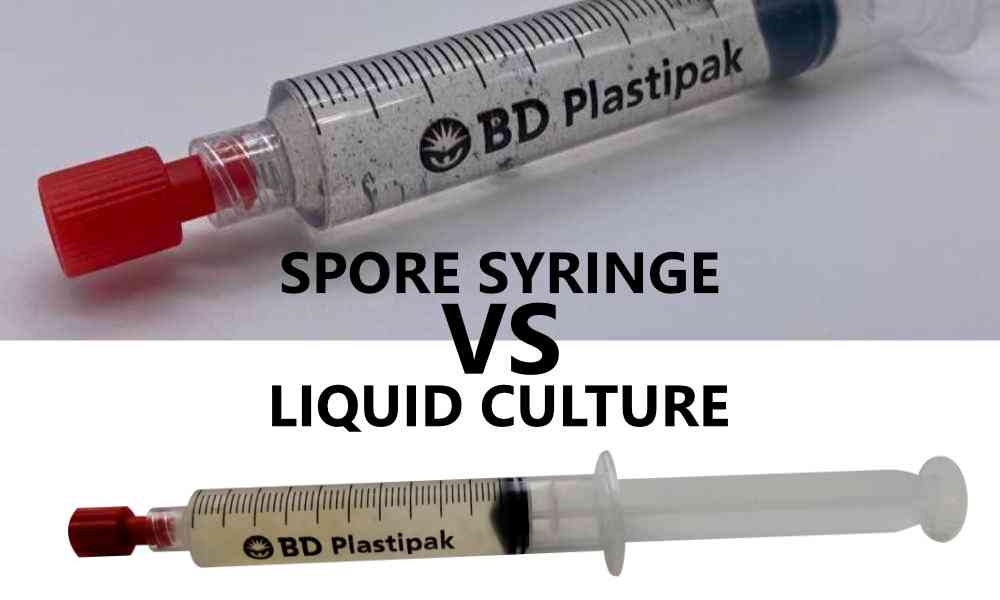
Think of spores as seeds. In nature, when a mature mushroom opens its cap, it releases spores into the air to reproduce. When you look at a spore syringe, you will often see tiny dark specks floating in the liquid—those clusters are thousands of spores clumped together.
How It Works
Because spores are dormant reproductive cells, they do not grow until they meet favorable conditions. Once introduced to a nutrient medium (like sterile grain or agar), two compatible spores must find each other, germinate, and fuse together to form living mycelium.
- Main Advantage: Spores are extremely resilient and have a long shelf-life. Kept in a cool, dark place or refrigerator, a spore syringe can remain viable for months or even years.
- Main Drawback: The germination phase takes time (often 7 to 14 days) before you see any visible growth. Additionally, because every pair of spores creates unique genetics, growth rates can vary.
What Is Liquid Culture (LC)?
A liquid culture syringe contains living, isolated mycelium suspended in a nutrient broth (usually diluted honey, malt extract, or dextrose water).
If spores are seeds, liquid culture is a living plant cutting that is already growing.
How It Works
Because the liquid broth contains sugars, the mycelium is already alive, feeding, and expanding inside the syringe before you even use it. When you inspect a liquid culture syringe, you won’t see black specks; instead, you will see a cloudy, thread-like cloud floating inside clear or light amber liquid.
- Main Advantage: Fast colonization times. Because the mycelium is already alive and active, it skips the germination phase entirely and starts taking over grain or agar within days.
- Main Drawback: Living mycelium has a shorter shelf-life than dormant spores. It must be stored carefully in a refrigerator and used within a few months before the nutrients run out or the mycelium degrades.
Spore Syringe vs Liquid Culture: Side-by-Side Comparison
| Feature | Spore Syringe | Liquid Culture (LC) |
| Contents | Dormant spores in sterile water | Live mycelium in nutrient broth |
| Visual Appearance | Clear liquid with black/dark specks | Clear/amber liquid with cloudy white webs |
| Start-Up Time | Slower (7–14 days to germinate) | Faster (2–5 days to take hold) |
| Genetics | Genetic variety (multi-spore) | Isolated/uniform genetics |
| Shelf-Life | Long (6–12+ months in cold storage) | Shorter (3–6 months refrigerated) |
| Contamination Risk | Slightly higher (requires germination phase) | Lower (fast growth outpaces competing mold) |
Which One Should Beginners Choose?
Both options have clear advantages depending on your goals:
Choose a Spore Syringe If:
- You want long-term storage: If you are buying material ahead of time and plan to store it for months, dormant spores offer maximum shelf-life.
- You want genetic diversity: Multi-spore inoculation gives you a wide mix of genetic traits to observe and select from.
Choose Liquid Culture If:
- You want speed: Liquid culture bypasses germination entirely, significantly cutting down total colonization time.
- You want consistency: LC typically comes from an isolated strain, meaning growth rates and characteristics remain uniform across your medium.
- You want a lower contamination window: Fast-growing mycelium quickly establishes itself, giving mold or bacteria less time to take over.
Frequently Asked Questions (FAQ)
Can you turn a spore syringe into liquid culture?
Yes. You can inoculate a sterile liquid nutrient solution (such as a water mixture with light malt extract or dextrose) with a spore syringe. Once the spores germinate and form mycelium inside the liquid, it becomes liquid culture.
How should I store spore syringes and liquid culture?
Both are best stored in clean, airtight bags inside a standard refrigerator at temperatures between 2°C and 8°C (35°F to 46°F). Avoid freezing temperatures, as ice crystals can damage cell walls.
Is liquid culture less risky for contamination than spore syringes?
Generally, yes. Liquid culture inoculates grain or agar with active, growing mycelium, allowing it to colonize the substrate quickly. Spore syringes require an initial germination period, leaving a longer window for competing contaminants (like mold spores or bacteria) to take hold.
Conclusion
When deciding between a spore syringe vs liquid culture, there is no single “correct” choice—only the choice that best aligns with your timeline and experience level.
If speed, rapid colonization, and consistent growth patterns are your top priorities, liquid culture gives you a major head start. If long-term shelf storage and working with diverse genetics matter more, a spore syringe is your ideal starting point.
Whichever option you select, always maintain strict sterile technique—using isopropyl alcohol, sterile needles, and proper workspace hygiene—to ensure the best possible results.
